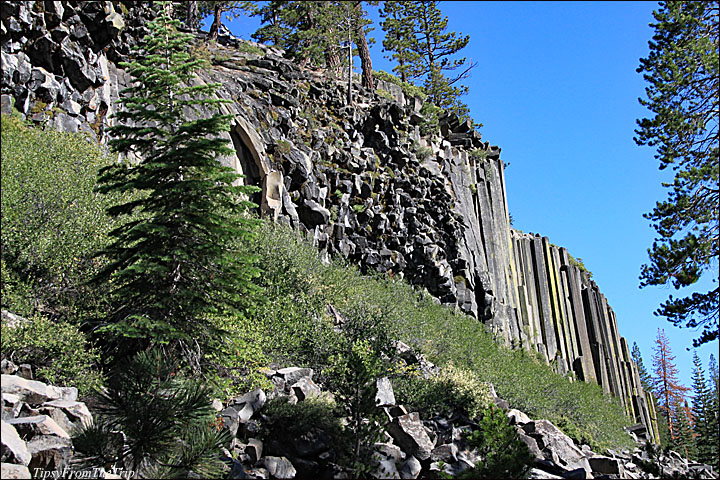
The trip to Devil’s Postpile had been on the anvil for a long time! It took a while to take shape because I would think of it, decide to chart out a fall trip and before I knew it, the cold season would be upon us and Devils Postpile would be moved to the back burner! Neither is this National Monument in Eastern California open all year long nor are most of the roads that lead to it.
Devil’s Postpile National Monument lies on the top of the Western slope of the Sierras but you get there through the eastern slope. And the ‘postpile’ here is a large upright pile of Columnar Basalt — tall stony posts made of Basalt. If you’ve read the post on the basaltic columns on St. Mary’s Island in India, you might have seen a sample of this type of rock formation. (Those are shorter columns, and paired with the colors of the Arabian Sea, they make quite a pretty picture.) The columns here in Devil’s Postpile are taller and more defined in comparison, probably because it does not have to deal with sea-erosion. However, this part of the state does receive snow and this national monument is closed during the winter months.
The Devils Postpile hikes
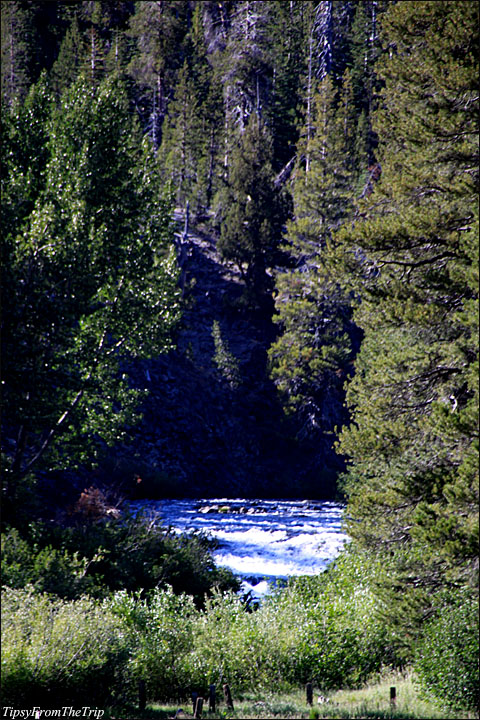
Our trip to the Postpile materialized on an August Day. It started at Mammoth Mountain Adventure Center where we bought tickets for our mandatory shuttle to Devil’s Postpile. A half-hour bus ride through the valley and some hills brought us to the Postpile shuttle-station. From there, we began our hike through a small meadow and up the hill to the National Monument. It was an easy hike beside the Middle Fork of the San Joaquin River.
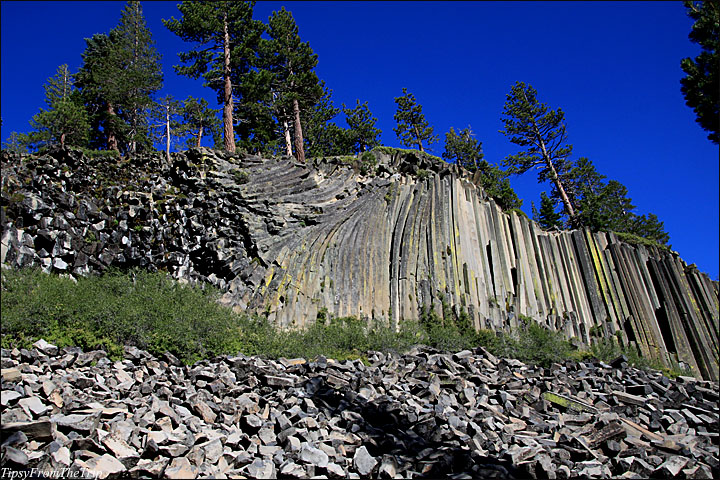
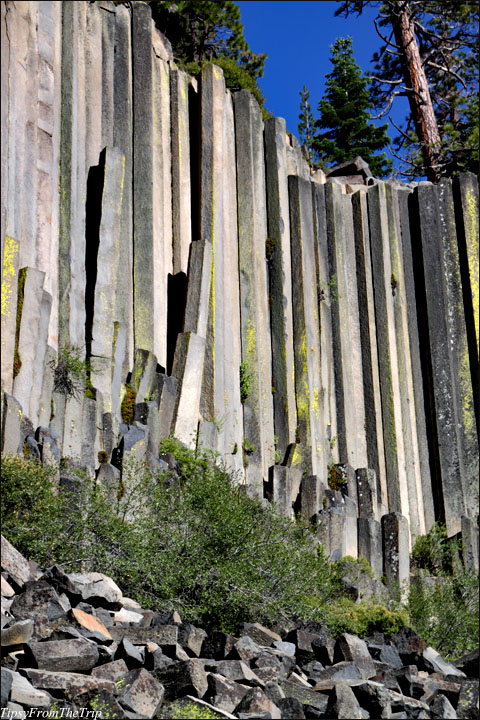
A slight ascent later we were at the foot of naturally-sculpted and geometrically-perfect columns that rose to a height of 60 feet. I was finally at Devil’s Postpile. It was a big item crossed off my travel wishlist!
Hike 1 — To the Postpile
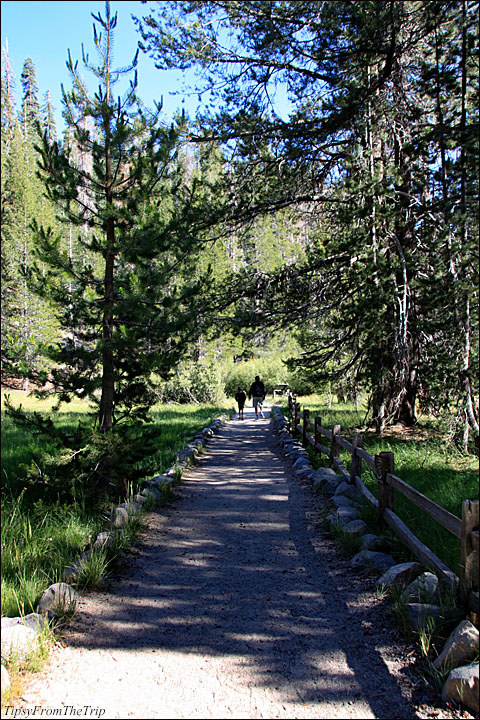
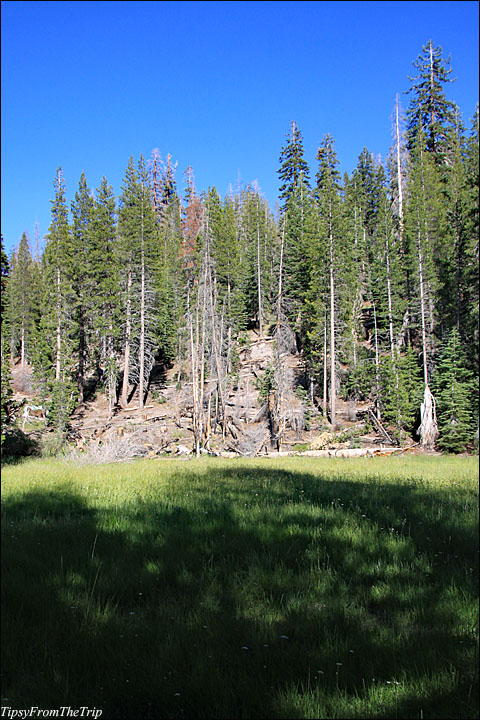
After marveling at the shape and the neat faces of the columns, and staring at the bent ones on the left side of the pile, we took some pictures, read the information boards and began our next hike — this one to the top of the columns.
A park employer at the Ranger Station had told me that this hike would take us up another 100-odd feet and that it would be a bit of a climb. It started off with a steep ascent and then the trail zig-zagged halfway up, and then it was a gradual rise. By the time I reached the top, I was out of breath — more because of the rarified air than the uphill climb. The postpile is said to be at an elevation of over 7000ft. and our shuttle driver had reminded us that we were to keep ourselves hydrated especially if we were visiting from sea-level areas.
Hike 2- To the top of the Basaltic Columns
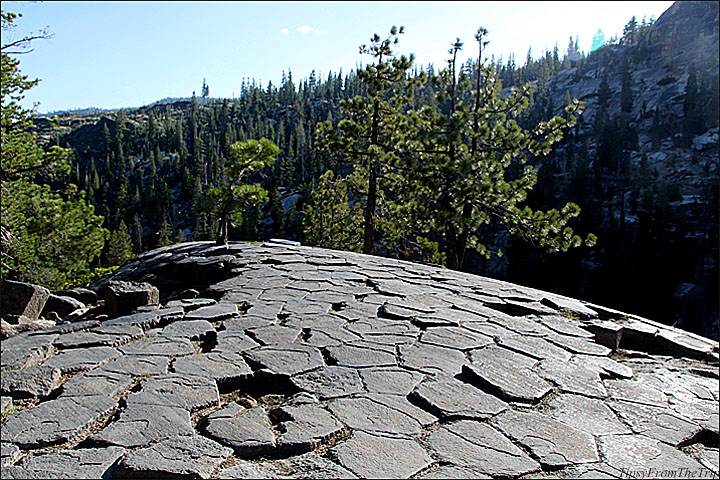
Once at the top of the basaltic columns there were views of a meadow and that of the middle fork of the San Joaquin River flowing by. But what I was most amazed by was the top of the columns. They looked like hexagonal pavers put together by a master landscaper. Barring some chips on the surface, the surface looked quite smooth. The glacier that slid this way sure did a great job at polishing the top of those basaltic columns.
The Columnar Basalts of Devils Postpile
Wondering how this natural wonder came into being? It is believed that not more than 20,000 years ago, a stream of basaltic lava that was flowing down the Sierra Nevada mountains got dammed by a moraine. And then the pool of lava cooled and cracked vertically as basalt is known to do (the cracking happens so as to relieve stress in the rocks). The cracks formed then deepened and made these classic basaltic columns.
Columnar Basalts are said to form when the mineral composition in the basaltic lava is consistent and the cooling is slow and even.
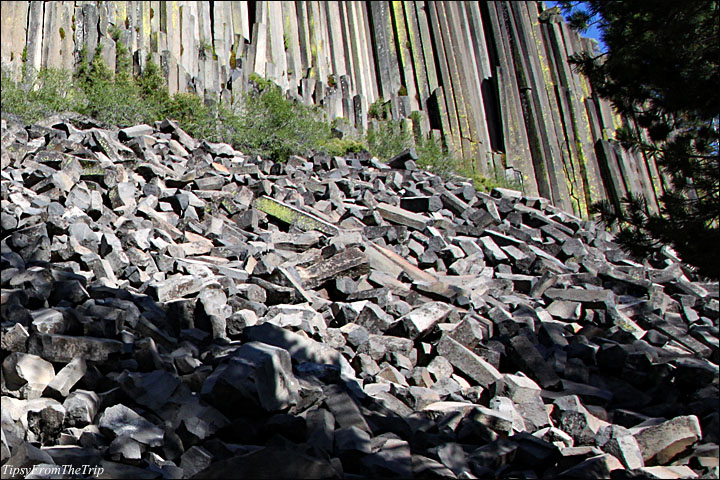
Coming back to the basalt columns at Devil’s Postpile, they were said to have been exposed when there was glacial activity (some 12,000 years ago) where the fork of the San Joaquin river now flows. When the soil and debris from the moraine were washed away, there stood the basaltic columns showing off their shapely faces. The ground of broken pieces of basalt at the bottom of the pile is said to be a collection of the remnants of erosion and earthquakes that the area has been subjected to in the centuries that followed the glacier.
Things you need to know for the trip
If you are tripping between mid-July and September, you are expected to take the shuttle to the postpile. You can buy your tickets and board the bus at Mammoth Adventure Centre.
It is recommended that you set aside at least 2 hours for your visit to the basaltic columns (additional time if you would like to do other hikes in the area). The shuttle takes around 30 minutes, one way.
The hike from the shuttle station to the Postpile is .4 miles.
The hike to the top will take you an another 20 minutes and might make you feel a bit of altitude sickness.
Tips for the trip to Devils Postpile
Make sure you are wearing sensible shoes for the hike
Carry an extra layer of clothing.
Drink lots of water to stay hydrated
ICYMI:
Islands of Basaltic Columns
Also from the area
Mono Lake
South Tufa Trail
Yosemite
Linking to —
Travel Photos blog hop
My Corner of the World
All Seasons
For tidbits from the road, Like/Follow Tipsy From The TRIP on Facebook or Instagram
Come, Trip with us. 😉


What fantastic scenery!
I agree! Fascinating, too!
Thank you for hosting & thank you for your visit, Lydia. 🙂
Interesting.
Isn’t it?! 🙂
Thank you for stopping by, Jim. 🙂
And back again to thank you for joining in at #Allseasons. Hope to see you next week
😀
Thank you so much, Lydia.
And thanks for hosting, too. 🙂
…those basaltic columns are amazing. They make great water feature in the landscape when they are cored out. Nature sure is an amazing thing.
Oh, Absolutely amazing!
I’ve only seen these columns in their natural areas so I was not aware of these columns or parts of them being used to beautify spaces. That’s interesting.
Thank you, Tom. 🙂
Never seen anything like that before. Thank you for sharing!
I’m glad I got to show these rock formations to you.
It’s such a pleasure. Thank you for visiting. 🙂
it is impressive. I’ve see such formations in Iceland. this seems like a great hike.
Isn’t it?
With all the volcanic activity in Iceland, there must be quite a few places that have these formations, right?
Thank you for coming this way, Klara. 🙂
the wonders of Nature!
Wow! Spectacular!
I’ve never seen anything like these before!
Isn’t it?
Now you have. 😉
I’m so glad I was able to show you these sights. Thank you for visiting, Veronica.
Wow! Who knew you could do a climb in California that sounds more like one in Colorado! Pretty cool
California has a wide variety of natural attractions, many of them rocky ones. You’ll find many of them featured here.
Thank you so much for stopping by, Sallie. 🙂
That’s nature at it’s best! such a wonderful natural formation.
Places like this AMAZE me! If you’re ever in the Mangalore area, make it a point to go check out St. Mary’s Island just off Malpe Beach, ok
Thank you for coming this way, Nomad. 🙂
I’d like to pick up one of those letters and kill the devil! But I’m satisfied simply to look at the beauty of such unusual rock formations. Great post.
haha … such a misnomer! 🙂
So much beauty here. And to think that it’s all natural!
Thanks a ton, Sharon. 🙂
Thank you for this post. This one’s not on my radar before today. It’s going to be on my to-see list soon 🙂
You’re so welcome. M.
You’ll totally enjoy this place. Make sure to go see the tufas of Mono Lake, also.
Have a great trip.
Oh — you get some great fall color too in the area. 😉
…geology is fascinating!
Absolutely! And I am thoroughly enjoying these rocky destinations in the US. <3
Thank you for stopping by, Tom. 🙂